


Image by AH Love Stories
Flowers play a big role in shaping the look and feel of your wedding day. They can tie your color palette together, bring character to blank spaces, and add a splash of natural beauty to photos. Whether you’re envisioning lush arrangements or just a few thoughtful accents, it’s helpful to know where florals can be used and how to get the most out of them.
This wedding flower checklist is organized into five sections, guiding you from getting ready to the last dance. Even if you’ve never worked with a florist before, you’ll find clear ideas, optional extras, and practical tips to help you plan your blooms with confidence.
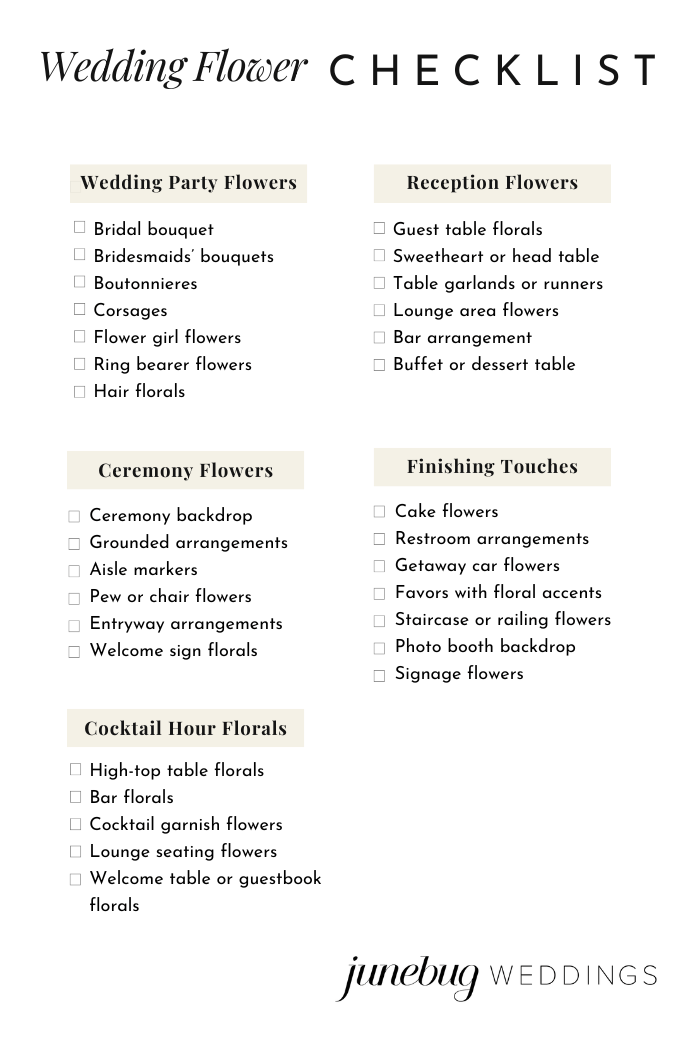
Wedding Flower Checklist
Wedding Party Flowers
These are the flowers you and your wedding party will hold or wear. They appear in most of your portraits and throughout the ceremony, so consider how they coordinate with your overall wedding style.
- Bridal bouquet – Your main floral statement. Choose blooms that reflect your personal style and work with your dress and color palette.
- Bridesmaids’ bouquets – Can be smaller versions of your bouquet or feature complementary blooms for variety.
- Boutonnieres – Small accents for the groom, groomsmen, fathers, and grandfathers; opt for hardy flowers that won’t wilt quickly.
- Corsages – Worn on the wrist or pinned, often for mothers, grandmothers, or other honored guests.
- Flower girl flowers – Petals to toss, a mini bouquet, or a floral crown for a playful touch.
- Ring bearer flowers – A boutonniere or small floral accent for the youngest members of your party.
- Hair florals – Fresh blooms or greenery for the bride or attendants, secured by a hairstylist on the day.
JB Tip: Finalize your wedding party count early. The number of bouquets, boutonnieres, and corsages can be one of the biggest factors in your wedding flower checklist and budget.

Image by Brittany Ford Photography
Ceremony Florals
These flowers help frame your vows and create the backdrop for some of your most meaningful photos. Aim for arrangements that are easy to see from any seat while still keeping the focus on you.
- Ceremony arch, chuppah, or backdrop – Frames you during vows and creates a focal point.
- Grounded arrangements – Low, garden-style florals placed around the altar without blocking sightlines.
- Aisle markers – Small floral or greenery accents at the end of each row of chairs.
- Pew or chair flowers – Great for highlighting the first few rows or special family seating.
- Entryway arrangements – Welcomes guests into the ceremony space.
- Welcome sign florals – A small arrangement to tie your floral palette into your signage.
JB Tip: Ask your florist or planner about repurposing ceremony arrangements for your reception or cocktail hour.

Image by Jagatiya Photography
Cocktail Hour Florals
Cocktail hour is where guests mingle after the ceremony, often in a separate space. A few well-placed arrangements can keep the design flowing and make the area feel just as intentional as the rest of your day.
- High-top table arrangements – Bud vases or small arrangements that don’t block conversation.
- Bar florals – A fresh arrangement to make the drink station inviting.
- Cocktail garnish station flowers – Edible flowers, herbs, or greenery to dress up drink displays.
- Lounge seating flowers – Small arrangements for coffee or side tables in relaxed seating areas.
- Welcome table or guestbook florals – Adds a decorative touch to interactive spots.
JB Tip: This is the easiest place to reuse ceremony flowers. Move aisle arrangements to high-top tables or place the altar florals near the bar for a cost-effective addition.

Image by Ashley Spangler
Reception Florals
Reception flowers bring your color palette and style into the space where guests will spend the most time. From centerpieces to accent pieces, they help create a warm, inviting atmosphere.
- Guest table centerpieces – The main floral decor for your dining space, from single stems to lush arrangements.
- Sweetheart or head table flowers – More elaborate arrangements to set your table apart.
- Table garlands or runners – Greenery or flowers running the length of rectangular tables.
- Place setting florals – A single bloom, sprig of herbs, or greenery at each seat for a personal touch.
- Lounge area flowers – Adds polish to relaxed seating areas.
- Bar arrangement – A bold floral piece to make the bar a focal point.
- Buffet or dessert table flowers – Adds color and style to your food displays.
JB Tip: If you’re using tall arrangements on guest tables, consider designs that sit high enough for guests to see and talk across the table comfortably.

Image by David Lack Photo
Floral Finishing Touches
These smaller, unexpected details can make your wedding feel extra special. While not essential, they add charm and personality in ways guests will remember.
- Cake flowers – Fresh or dried blooms on the cake or cake table; ensure they’re food-safe or placed with floral picks.
- Restroom arrangements – A thoughtful touch that makes guests feel cared for.
- Getaway car flowers – Garlands or mini bouquets tied to your exit vehicle.
- Favors with floral accents – A sprig of lavender or a dried bloom tied to each gift.
- Staircase or railing flowers – Adds drama in grand venues.
- Photo booth backdrop – Makes for more memorable guest photos.
- Signage flowers – Floral accents for seating charts, directional signs, or welcome boards.
JB Tip: Some of these details can work well as DIY projects. Picking up flowers the day before and arranging them yourself can be a budget-friendly option.

Image by Elegance Photographie
Think of this wedding flower checklist as a helpful starting point rather than a list you have to complete. Choose the flowers that feel most meaningful to you, then add details that fit your budget, venue, and style.
Pro Tip: Pin this checklist for quick reference as you plan, or download the spreadsheet to keep everything organized. With a clear plan, your flowers can do more than decorate—they can bring a sense of continuity and intention to every part of your day.



.jpg "Photographers")

